Projects
A selection of IFE's research projects
- Advanced Reservoir Tracing
- KMB-project 152821/130 Advanced Reservoir Tracing (ART) for improved oil recovery
- Aladdin
- The ALADDIN project aims at the study and development of flexible, accurate, and reliable event identification and fault diagnosis techniques for machinery and processes. The final goal is the development of a software module that can be easily integrated/interfaced with other existing Computerized Operator Support Systems (COSS).
- Boron Based
- Hydrogen Storage in Novel-based Compounds (Norwegian Research Council, project number 197756/V30)
- Chernobyl NPP decommissioning assistance project
- The Norwegian Ministry of Foreign Affairs (NMFA) has since 2006 funded an assistance project at the Chernobyl Nuclear Power Plant (ChNPP) in Ukraine. The goal of the project is to assist in the decommissioning of the site through better planning and training by establishing the Chernobyl Decommissioning Visualisation Centre (CDVC) based on the Virtual Reality (VR) technology.
- COAST - Alarm System Toolbox
- Alarm systems are essential elements for achieving safe, reliable and efficient operation of complex, dynamic processes. Based on long experience in design and implementation of alarm systems, IFE has developed the Computerized Alarm Systems Toolbox, COAST, which offers improved flexibility in configuring plant-specific alarm systems. COAST combines proven methods and technology in a design approach that results in an object-oriented alarm system.
- Complex Materials
- The purpose of the project is to investigate the connections between the microscopic and macroscopic properties of soft, complex materials. Examples of complex materials include biomaterials, polymers and biopolymers, colloids and complex liquids. These materials are characterised by weak interactions between their microscopic units and large variations in their spatio-temporal configurations.
- COMPSIS
- OECD Exchange of Operating Experience concerning Computer-based Systems Important to Safety Project
- COMPSIS Operational Agent
- COMPSIS - Operational Agent
- Control and distribution of radiopharmaceuticals
- All radiopharmaceuticals used in Norwegian hospitals are inspected and controlled by the Isotope Laboratories
- Control Room Upgrading, LKAB
- COPMA (Computerised OPerating MAnuals)
- COPMA-III is a software tool for supporting the use and development of Computerised Procedure Systems (CPS). COPMA-III has been used in human performance experiments in IFEs human-machine laboratory HAMMLAB and is also part of the permanent alarm display system in the laboratory.
- Corrosion and hydriding (H2 uptake) in different cladding materials
- High priority is given to the development of new fuel cladding materials that exhibit improved reliability and safety margins under reactor operation. Experimental evidence is required showing that the material has improved corrosion behaviour compared with other available materials.
- DC-casting Models
- Mathematical modelling of DC-casting is used to understand the basic mechanisms of the process and to interpret casting experiments, and the models ALSIM and ALSPEN have been used in process design and development over a long period of time. Current topics of research are the coupled stress, thermal and fluid flow modelling of the start-up phase of the process as well as grid refinement and adaptivity applied on finite element grids.
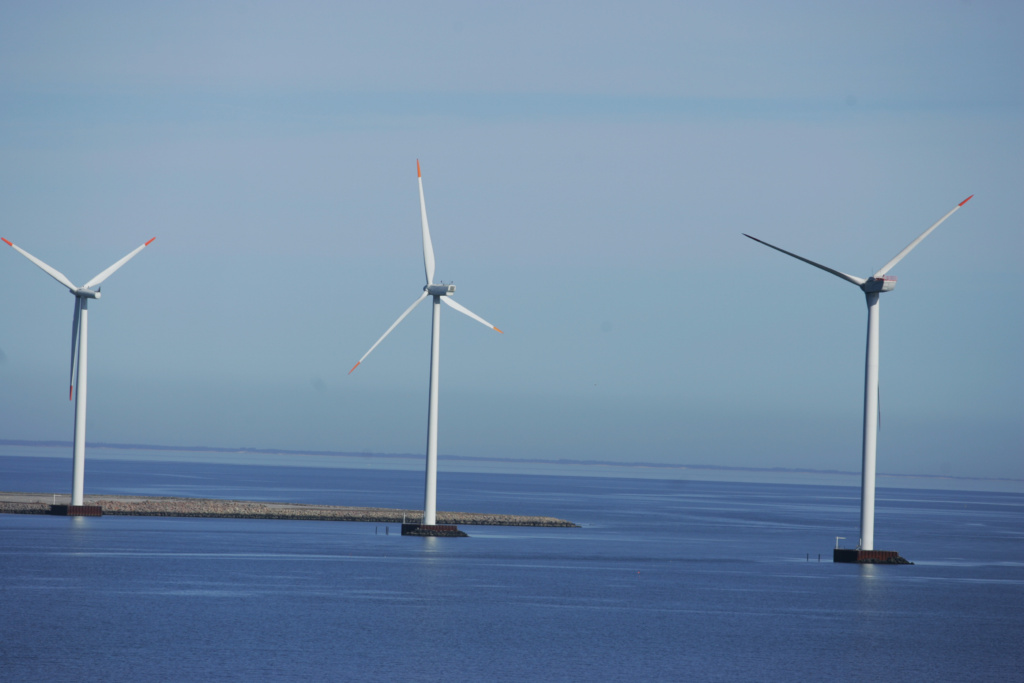
- Deep sea offshore wind turbine technology
- The exploitation of open sea (deep-water) wind energy resources can give access to a large number of sites with good wind conditions and less restrictions (noise, visual acceptance) than on-shore. Wind turbines used here may differ from conventional designs due to different operational conditions and absence of some restrictions.
- Dynamic RadIation Visualisation Engine - DRIVE 2011-2013
- The Norwegian Ministry of Foreign Affairs (NMFA) decided in December 2010 to fund a new project for the 2011-2013 timeframe. The tittle of the project is “Dynamic RadIation Visualisation Engine” (DRIVE). The participants are Institute for energy technology (IFE) and Federal Medical Biological Center (FMBC). The DRIVE project aims to utilize results and experiences from the existing and continued DOSEMAP and DATAMAP projects by using IFE tools to enhance regulatory supervision and safety planning in the Andreeva Bay area. This will be achieved by developing tools for the optimization of the waste management strategy and by improving radiation safety through better worker radiation awareness in Andreeva Bay premises.
- EC Project EGS Pilot Plan
- Our department in collaboration with Corrosion department at IFE takes part in the largest European Geothermal Project dealing with Hot Dry Rock (HDR) Technology in Soultz, France.
- EC Project ENGINE
- The ENGINE project is EC Network within 6FP, which coordinates “Unconventional Geothermal Resources and Enhanced Geothermal Systems”, from resource investigation and assessment stage through to exploitation monitoring.
- EC Project STORHY
- In collaboration with the Physics Department at IFE, we take part in EC FP6 IP with acronym STORHY that deals with hydrogen storage for car application.
- Effects of alloying elements on the stress corrosion cracking resistance
- During exposure to a radiation environment, the mechanical and microstructural properties of a material will change. The materials become harder and more brittle and the microstructure evolves in such a way as to make the material potentially more susceptible to cracking.
- Energy Systems Analysis - Projects